
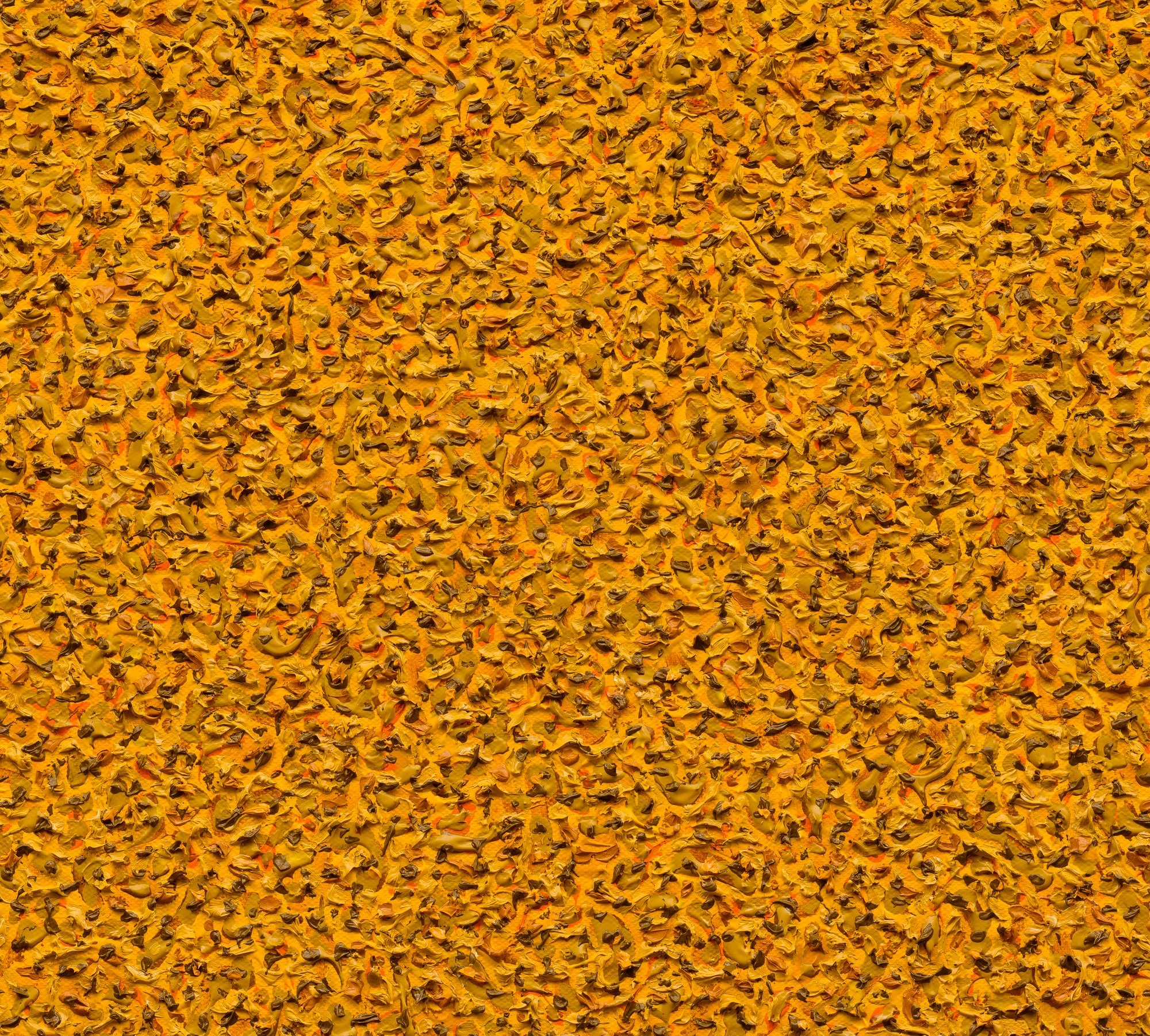
“Mantra” is a word that really gets to the heart of my work and covers a wide range of inspirations and motivations. Much like a Buddhist / Hindu mantra is a repeated word to aid in meditation, each mark, daub, slash of paint is my mantra toward the same spiritual ends. Like Tilopa’s sesame seeds, Van Gogh’s “iron wall,” Sisyphus’ boulder, the mindful, recursive quality of these actions are key to each work and fuel the processes behind them.
This fundamental simplicity leads to incredibly complex, detailed images, fully charged with the emotions, thoughts, and experiences of the moment – a mirror to one’s heart and soul. Being mindful during this process naturally leads one on a journey toward greater self-awareness, even revelation, all recorded on the canvas along the way. Much like switchbacks up a mountain, this is a rigorous, arduous, but blissfully rewarding experience that one can enjoy over & over again, bringing to mind Camus’ assessment that “One must imagine Sisyphus happy!”
In the same way, the Indian tantric master Tilopa’s time working as a sesame oil maker emphasizes the same underlying principle – equally compelling, inspiring, and profound. Tilopa discovered that in his years of “pounding the shell of sesame [to release] its essence” there lay a potent metaphor for the mind itself being led to realization and enlightenment through willful, repetitious, one-pointed, meditative focus & action, however seemingly mundane. Tilopa’s mantra.
In routine or creative endeavors, this patient, consciously progressive process of discernment and awareness is what drives personal growth and refinement – each moment, a mantra. In Van Gogh’s own storied pursuit of painting – his mantra – he referred to a metaphorical “iron wall” that he steadfastly worked against. This kind of tenacious, transcendent understanding can dramatically transform one’s moment-to-moment activity, underscoring the deep connection between an artist’s practice, spiritual development, and the soaring potential of that union.
In the great artist’s words:
“What is drawing? How does one get there? It’s working one’s way through an invisible iron wall that seems to stand between what one feels and what one can do. How can one get through that wall? — since hammering on it doesn’t help at all. In my view, one must undermine the wall and grind through it slowly and patiently. And behold, how can one remain dedicated to such a task without allowing oneself to be lured from it or distracted, unless one reflects and organizes one’s life according to principles? And it’s the same with other things as it is with artistic matters. And the great isn’t something accidental; it must be willed.”